
Case Study · Biosecurity Training
Biosecurity pride and business productivity: how Ruakura Distribution Centre brought MPI intervention containers onsite
“ The practical biosecurity training delivered at Ruakura Distribution Centre has been outstanding.”
Peter Phillip, Country Logistics Manager, Ruakura Distribution Centre
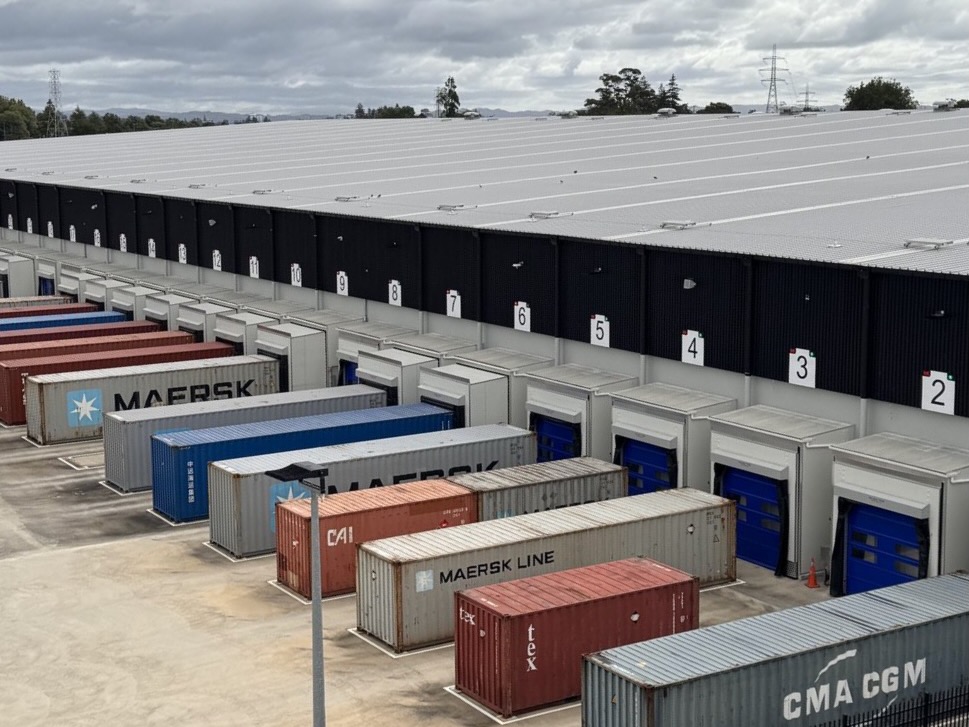
Ruakura Distribution Centre in Hamilton unloads around 10,000 sea containers a year, with goods typically moving through the site in under 24 hours. When the distribution centre opened in 2023, containers requiring intervention from the Ministry for Primary Industries (MPI) were processed at another facility. For an operation built for speed, Ruakura’s leadership made it a priority to build the biosecurity capability to handle those containers onsite.
The Partnership
Ruakura’s senior management team put their trust in IVS to build a programme specifically for their site: the Devanners Club. IVS had worked alongside Ruakura since the distribution centre opened. That relationship gave the two teams room to try a new way of training and adapt it as they saw what worked on the floor.
The Approach
IVS and the Ruakura team started with fortnightly spot checks and hands-on biosecurity awareness training. The spot checks showed where staff were running into difficulty. IVS adapted the training straight away so the next session focused on the weaknesses the team had just seen on the floor.
The Solution
Two containers and a full practice run
The first sessions used two already-unloaded shipping containers. IVS hid plastic items at points where staff might find contamination during a real unload. Participants ran through the full devanning sequence, from the initial checks of documentation to unloading, and had to find and report what was hidden. The exercise let the team practise See, Contain, Report in the same setting where they would need to use it.
As staff became more confident and consistent, Ruakura and IVS hosted several open days for MPI to see the progress firsthand. MPI then approved the distribution centre to handle intervention containers onsite, around 12 months after it opened. It was a major milestone for the operation. As confidence in the site’s procedures grew, the programme moved to monthly training and spot checks, backed by quarterly full audits.
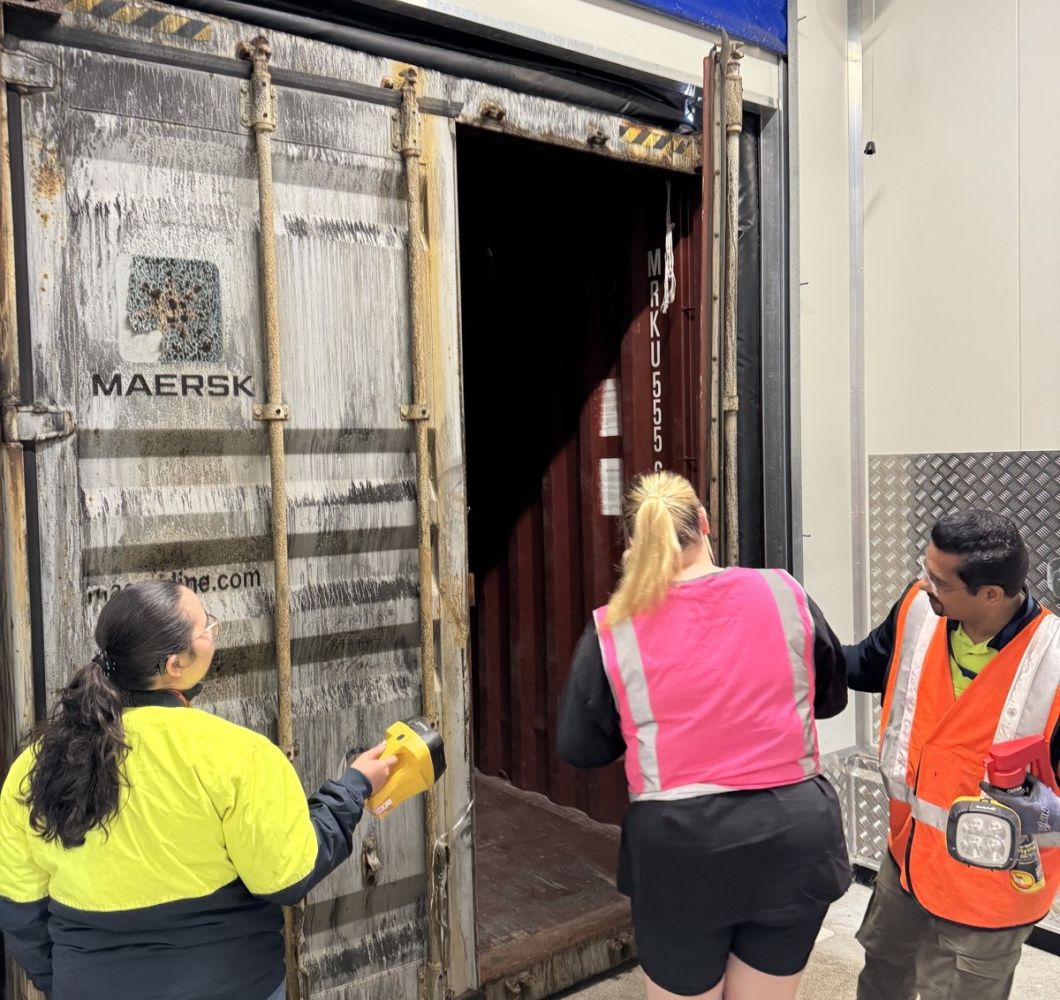
Hands-on checks at the container door.
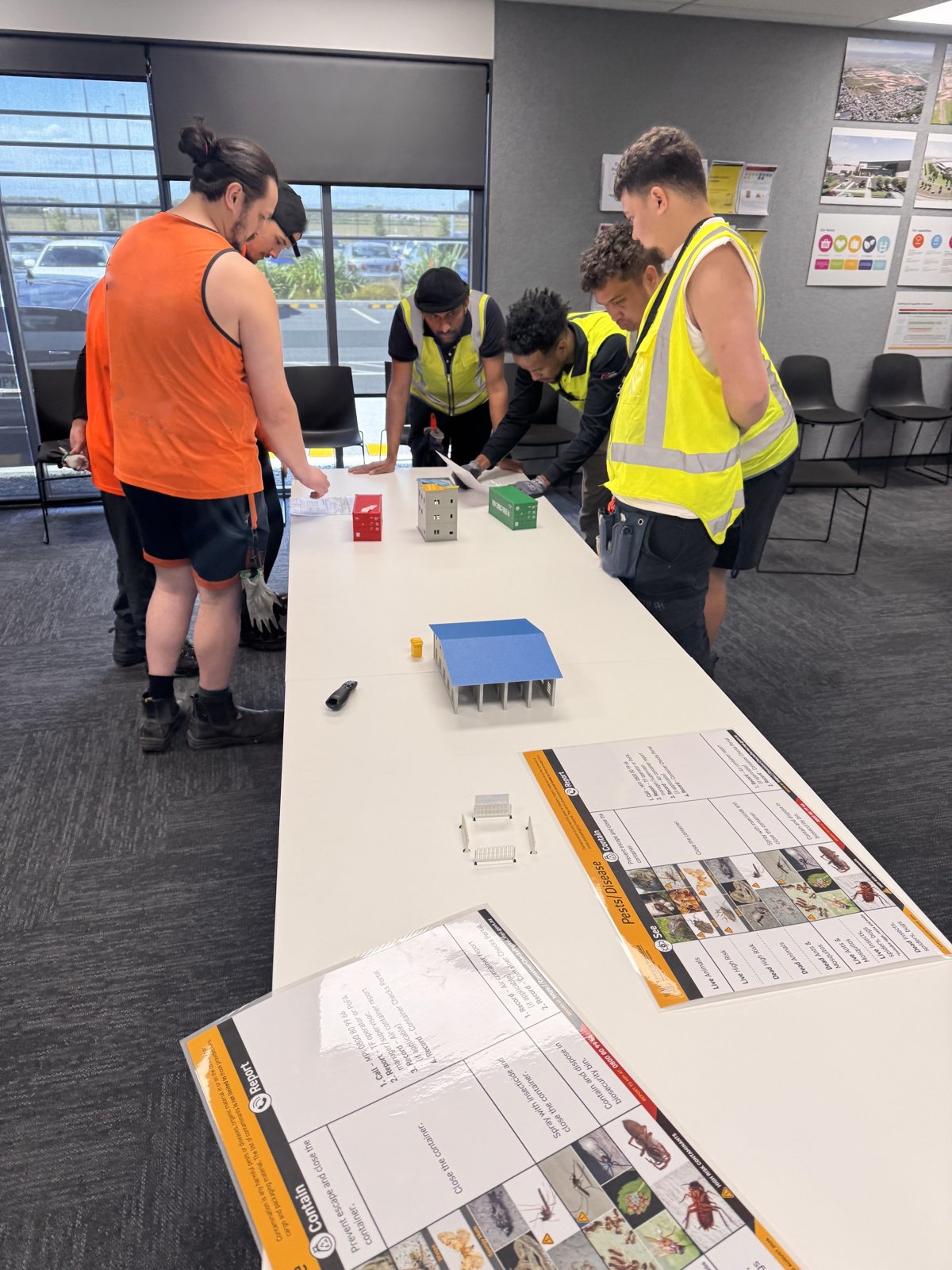
The miniature distribution centre gives teams a different scenario every session.
The Training
From full-size containers to a miniature distribution centre
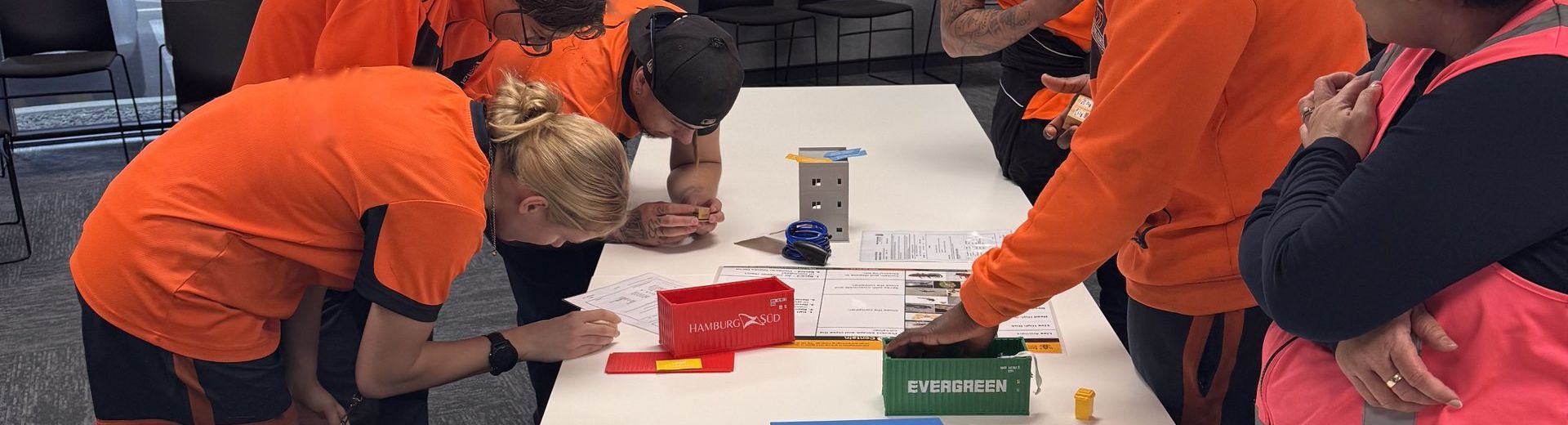
IVS built a miniature version of the facility to make it easier to practise a wider range of situations in each session. The model includes shipping containers, biosecurity equipment and small boxes for practising MPI holds. IVS plants plastic contamination and uses a bank of Biosecurity Authority Clearance Certificates (BACCs), the legal instructions that set out what must happen to each container, to vary the scenarios for every session.
A team might start by reading the directions on a BACC and deciding whether it can open the container. Then it has to work out what to do with contamination found during unloading, or where to put goods that MPI has placed on hold. Changing the paperwork and the location of the hidden items gives staff a different decision to make each time. The model-based biosecurity awareness session also cut training time from around two hours to one.
“ The use of realistic simulations, physical models and real-world scenarios creates an environment where our APs and team members are not simply being told what the correct process is. They are required to work through the scenario, identify potential biosecurity risks, apply the BACC and our site procedures, and make decisions about the appropriate response, with a few curly situations included to really keep them thinking.”
Peter Phillip, Country Logistics Manager, Ruakura Distribution Centre
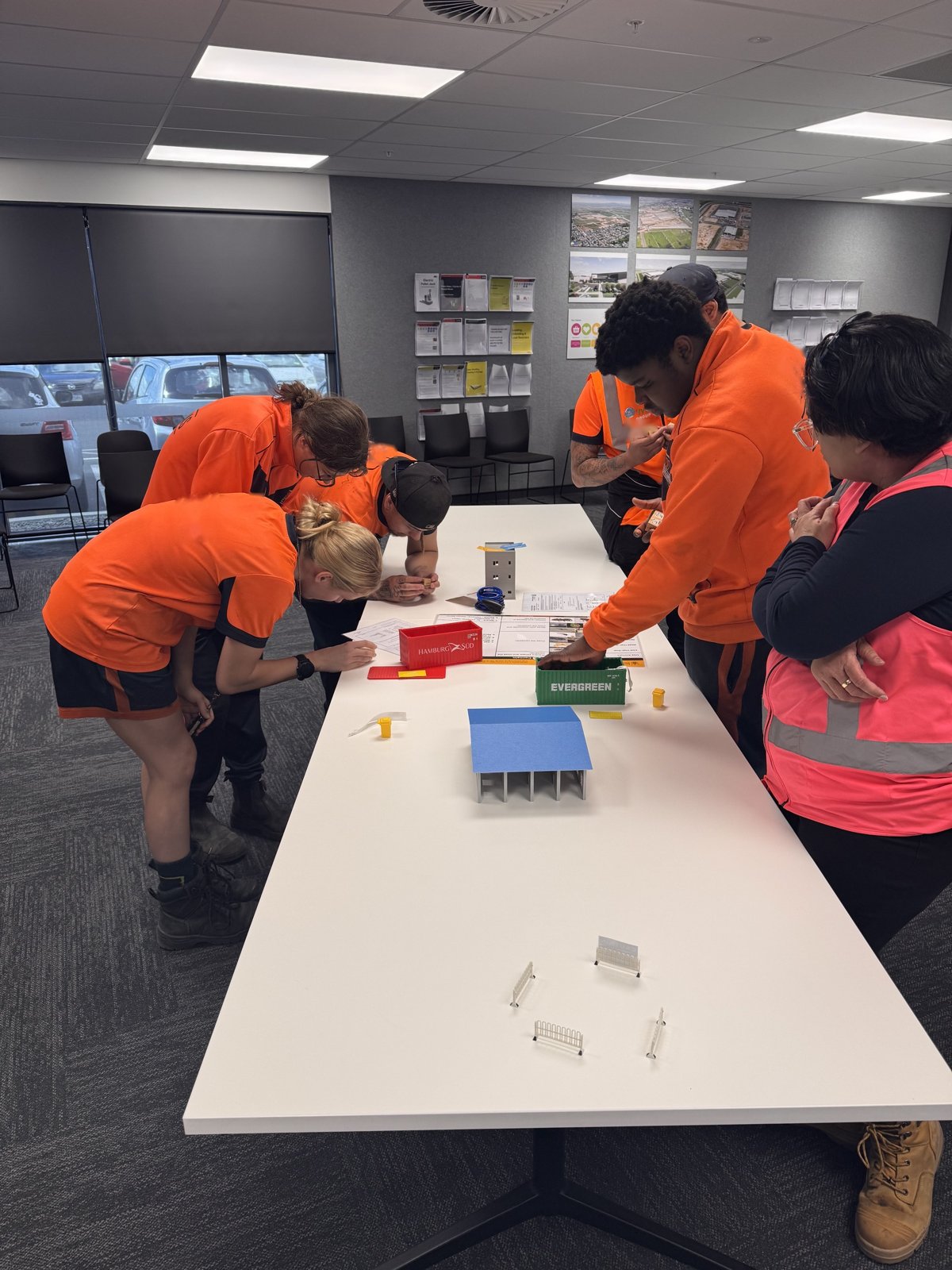
More than 200 staff have taken part in initial and refresher training.
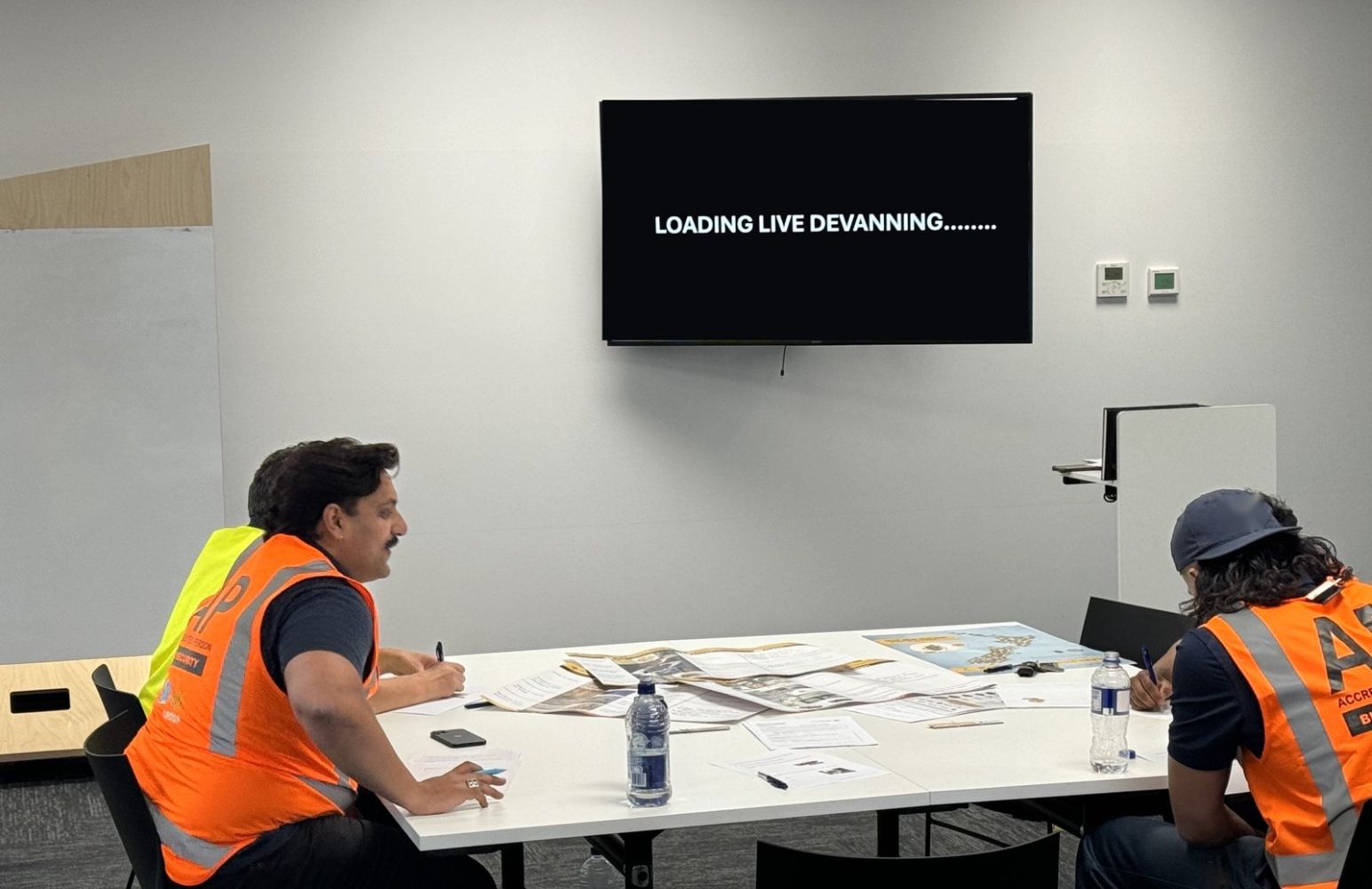
Biosecurity awareness training in session.
What changed
The interactive programme has now been running for two years. The wider awareness programme has reached more than 200 staff through initial and refresher training.
The results show in how MPI rates the site. Under MPI’s Performance Based Verification (PBV) system, MPI measures how compliant a facility is and sets its level of confidence in that site. The lower the confidence, the more often MPI audits and intervenes, adding cost and disruption. Ruakura has moved from audits every six months to yearly, and is now on an 18-month cycle, with a target of 24 months next year, the longest interval MPI allows.
For an operation built on high container throughput, fewer audits and handling intervention containers onsite support fast turnaround, and the site reported better productivity. The clearest operational change was that the distribution centre could handle MPI intervention containers onsite.
From Ruakura to AP courses across New Zealand
Ruakura’s senior management team helped give gamified biosecurity training its start by backing a programme built for their operation. IVS has since built the approach developed at Ruakura into its Interactive Accredited Person (AP) course, which is now MPI-approved and available to book. The same principle carries through from Ruakura: give people a container, a set of directions and a decision they’ll have to make on the job, in a safe, supportive setting away from the pressure of a live unload.
“ He has transformed what could be a compliance-focused training programme into an engaging, practical experience that our teams relate to and retain. The hands-on approach builds confidence, improves decision-making, and helps our people understand not just the process, but why it matters. We're proud of what we've achieved together and highly value the partnership we've built with IVS over the years.”
Arthur Omar, DC Operations Manager, Ruakura Distribution Centre
The same hands-on approach is now available through the Interactive AP course and onsite training. Get in touch to find out how it could work for your team.